
Space Wins Innovations and Achievements in Exploration

Adopt a proactive approach in supporting initiatives that propel our understanding of the universe. Engaging with pioneering organizations like NASA and ESA can lead to greater insights and foster collaborative projects.
Invest in new technologies that enhance data collection and analysis. Satellite systems with advanced imaging capabilities are now critical for monitoring planetary conditions and celestial events.
Prioritize funding for research programs focusing on autonomous exploration. Robotics and AI are reshaping our capacity to study distant terrains without risking human life, enabling numerous missions to inaccessible locations.
Build alliances with academic institutions and private sectors to share knowledge and resources. This multi-faceted approach can enhance the effectiveness of missions and expand the pool of innovations for future challenges. Engaging diverse talents will amplify the success of research initiatives.
Finally, stay informed about international collaborations that seek long-term objectives in cosmic sciences. These partnerships not only widen the scope of exploration but also contribute to sustainable practices in the utilization of space resources.
Recent Breakthroughs in Space Propulsion Technologies
Emphasizing the advancements in propulsion systems, ion propulsion has shown considerable promise. The NASA's Evolutionary Xenon Thruster-Commercial (NEXT-C) project has achieved a specific impulse of over 4000 seconds, enhancing efficiency and thrust for long-duration missions.
Another significant development is the use of nuclear thermal propulsion. The NASA's Project Chariot aims to create a reactor that heats hydrogen, producing higher thrust compared to conventional methods, potentially reducing travel time to Mars to just a few months. Experimental tests are expected to begin soon.
Solar sails are making headway, relying on radiation pressure for propulsion. The Planetary Society's LightSail 2 successfully demonstrated this technology, achieving its goal of propulsion without fuel, opening doors to interstellar missions.
Advancements in plasma propulsion, like the Variable Specific Impulse Magnetoplasma Rocket (VASIMR), can modify its thrust by adjusting the input power to the plasma, allowing for more flexible mission profiles and significant fuel savings.
Additionally, research into beamed energy propulsion, which uses lasers to propel craft, shows potential for high-speed interplanetary travel, with pilot programs commencing within the next few years.
Incorporating these technologies can drastically alter mission capabilities, suggesting an agile future in deep space engagements.
Innovative Life Support Systems for Long-Duration Missions
Utilizing closed-loop systems enhances resource management by recycling air and water efficiently. Implementing technologies such as bioregenerative life support, which leverages biological processes for food production and waste recycling, provides sustainable solutions for extended missions.
Advanced air purification systems are critical for maintaining breathable environments. Incorporating sorbent materials can effectively remove carbon dioxide while ensuring a consistent oxygen supply. Employing plants in conjunction with these systems offers a dual benefit, producing oxygen and recycling carbon dioxide.
Water recovery and purification methods are vital. Using state-of-the-art filtration techniques, including nanofiltration and reverse osmosis, maximizes water reuse. This not only conserves resources but also minimizes resupply missions.
Thermal control remains another significant aspect. Implementing phase change materials can help regulate temperature fluctuations efficiently, protecting both equipment and crew members while reducing energy consumption.
Monitoring health and psychological well-being is important for crew performance over long periods. Wearable technologies can track vital signs and mental state, providing data for timely interventions to maintain health.
Integrating these technologies into a unified life support system promotes resilience and sustainability. Prototypes should undergo rigorous testing in analog environments to validate their functionality and efficiency before deployment in actual missions.
The Role of Robotics in Space Exploration Expeditions
Implementing robotics in missions beyond Earth enhances capability and safety. Rovers, drones, and automated systems carry out tasks under harsh conditions, significantly reducing human risk.
- Data Collection: Robotic devices gather real-time information on planetary surfaces, atmospheric conditions, and geological samples. For example, the Mars rovers analyze soil and rock, providing insights into the planet's history.
- Construction: Automated technology aids in building structures on celestial bodies. These systems can assemble habitats or infrastructure, facilitating human presence on other planets.
- Maintenance: Robotics repair equipment using remote operation or pre-programmed instructions. This capability extends mission duration, reducing the need for costly resupply missions.
- Telepresence: Remote-controlled robots enable scientists to conduct experiments from Earth, minimizing the need for human travel while maximizing operational efficiency.
Future missions should prioritize advancements in robotic autonomy to handle increasingly complex tasks without direct human intervention.
- Integration of artificial intelligence will enhance decision-making processes, enabling real-time responses to unforeseen challenges.
- Collaborative operations between humans and robots will optimize mission outcomes, where humans supervise multiple robotic systems simultaneously.
Investing in robotics technology is key to expanding capabilities and efficiency during missions beyond our planet, ensuring successful ventures into the unknown.
Advancements in Space Imaging and Data Collection
The deployment of high-resolution satellite imagery systems, such as the WorldView series, enables detailed observations of terrestrial changes at a remarkable scale. These satellites provide spatial resolutions down to 31 centimeters, allowing for precise urban planning and natural resource management.
Optical and radar imaging technologies contribute significantly to data gathering. Synthetic Aperture Radar (SAR) systems, like the Sentinel-1, can capture images regardless of weather conditions or daylight, facilitating constant monitoring of environmental shifts, disaster response, and infrastructure stability assessments.
Machine learning algorithms enhance the processing of vast datasets collected from various sensing platforms. Utilizing neural networks for image recognition and classification dramatically improves the accuracy of identifying land cover types and biological changes over time.
Multi-spectral and hyper-spectral sensors provide rich chemical information across different wavelengths, offering insights into vegetation health and mineral compositions. Instruments such as NASA’s EO-1 have shown impressive capabilities in differentiating between types of vegetation and detecting pollutants.
Collaboration with commercial entities has accelerated advancements in data collection methodologies. The deployment of CubeSats, small satellites that can be produced at lower costs, facilitates an increase in the frequency of data acquisition, thus enhancing temporal resolution for monitoring dynamic phenomena.
Interactive platforms for geospatial analysis enable stakeholders to visualize and analyze collected data in real-time. Tools like Google Earth Engine allow researchers and decision-makers to access vast datasets easily, streamlining the derivation of actionable insights from complex information.
Investment in cloud computing infrastructure enhances data storage and processing capabilities, making it feasible to handle the increasing volumes of information generated by modern imaging systems. This infrastructure supports collaborative efforts across regions and disciplines, fostering enhanced research outputs.
International Collaborations Driving Space Research Success
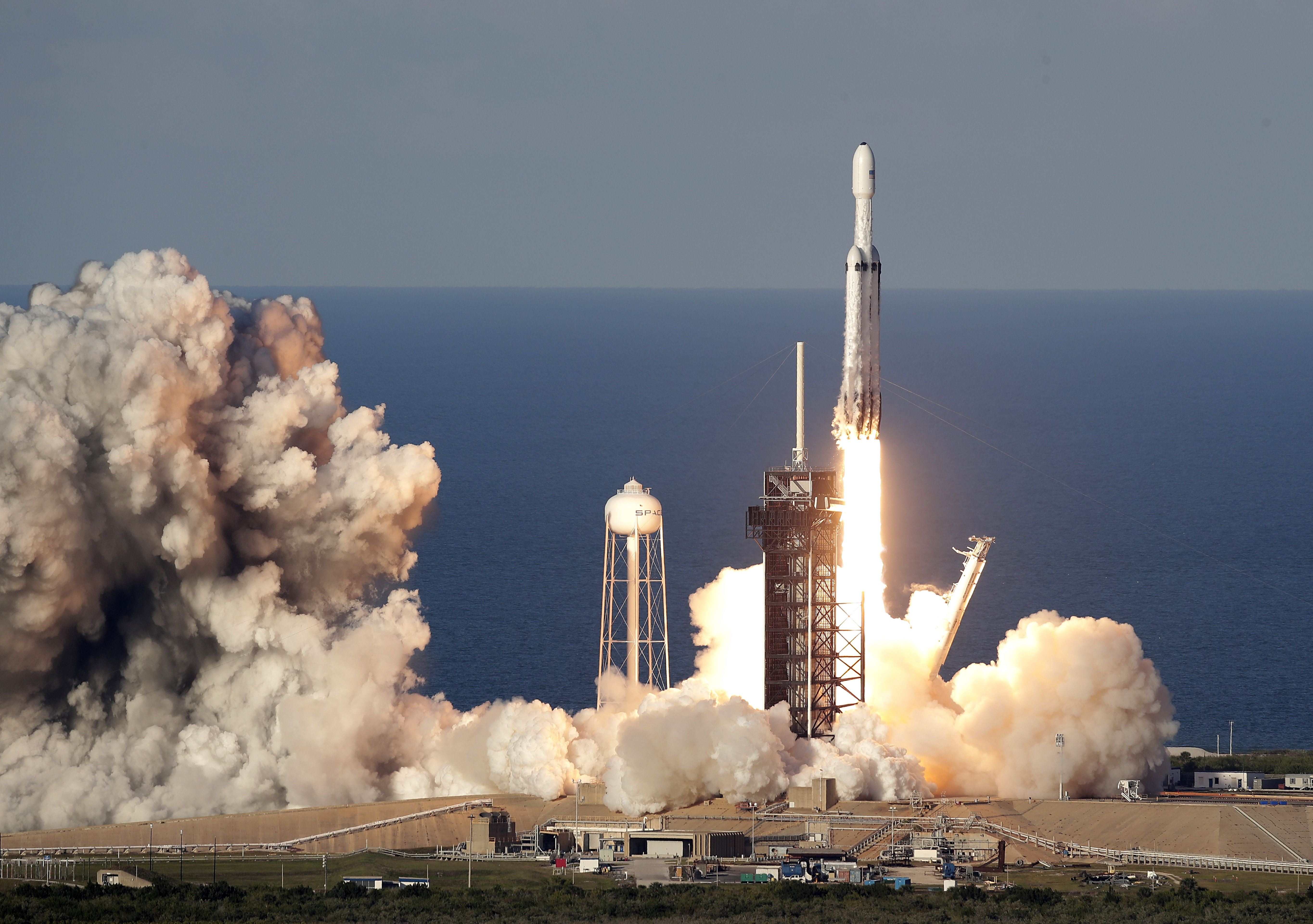
Joint missions, such as the International Space Station (ISS), exemplify the power of global partnerships in advancing scientific understanding. This collaborative effort involves space agencies like NASA, ESA, Roscosmos, JAXA, and CSA, pooling resources and talent to conduct vital experiments and research.
The Mars Sample Return mission highlights another significant joint initiative. NASA and ESA are working closely to retrieve samples from Mars, showcasing shared expertise in technology and logistics. This project, scheduled for the late 2020s, emphasizes the importance of international cooperation in tackling complex challenges.
Furthermore, the Artemis program aims to land humans on the Moon, involving partnerships with various countries and private entities. Such alliances leverage diverse capabilities, ensuring a well-rounded approach to lunar sustainability and research.
Specific agreements, like the Global Exploration Roadmap, enable participants to outline collaborative objectives in the universe. These frameworks provide clear pathways for sharing technology, information, and research findings, enhancing efficiency in operations.
Additionally, initiatives like the World Space Week foster global outreach and education, encouraging participation from diverse nations in the scientific discourse. This engagement cultivates a new generation of researchers, bolstering future endeavors.
Investing in collaborative space efforts not only accelerates progress but also addresses challenges ranging from environmental monitoring to planetary defense. These partnerships cultivate a culture of shared knowledge and expertise, driving forward breakthroughs in research and discovery.
Commercial Space Endeavors Transforming Exploration Strategies
Investment in private enterprises enhances operational efficiency. Companies such as SpaceX and Blue Origin are redefining cost structures, making missions more accessible. The shift to reusable launch systems has significantly reduced expenses and turnaround times.
Public-private partnerships are central to evolving mission frameworks. NASA's collaborations with commercial entities are creating opportunities for shared resources and expertise. Programs like the Commercial Crew Program are examples of leveraging private capabilities to achieve governmental objectives.
New technologies are rapidly emerging, driven by competition. Advances in satellite communication, in-orbit manufacturing, and propulsion systems enable streamlined project execution. This competitive atmosphere encourages innovation in payload delivery and mission design.
Global markets are opening up, allowing for diverse players. Nations are increasingly collaborating with private firms to expand their capabilities. With the introduction of regulations accommodating commercial activities, international cooperation is more feasible than ever before.
Focus on sustainability is prominent among new ventures. Companies are investing in eco-friendly technologies to minimize the environmental impact of their operations. The development of propulsion systems with reduced carbon footprints is one example of this commitment.
Data gathering and analytics play critical roles in modern strategies. Utilizing advanced algorithms to process large datasets enhances mission planning and execution. This improves both prospecting for resources and understanding extraterrestrial conditions.
| Company | Focus Area | Key Technology |
|---|---|---|
| SpaceX | Launch Services | Reusable Rockets |
| Blue Origin | Suborbital Tourism | New Shepard |
| Virgin Galactic | Space Tourism | SpaceShipTwo |
| Axiom Space | Commercial Space Stations | Modular Habitats |
| Rocket Lab | Small Payload Launch | Electron Rocket |
The convergence of commercial efforts is reshaping strategic methodologies. As private entities gain prominence, flexibility in operations improves, leading to a more dynamic and adaptive approach to pursuing cosmic frontiers.